


Green2 Feed – Sustainable animal feed and biogas from green leaves
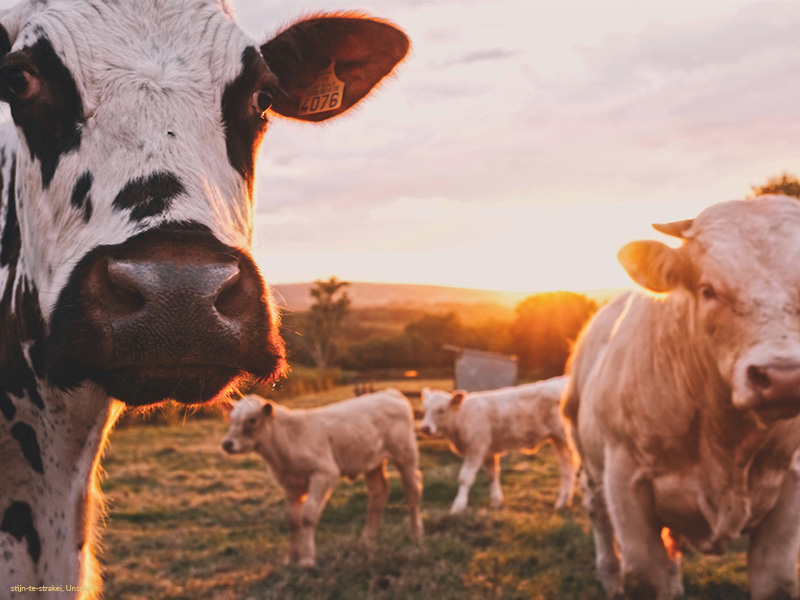
Green leaves can become both animal feed and biogas
The Green2Feed project has explored how green plant biomass (such as forage crops, cover crops, and sugar beet tops) can be used more efficiently to produce both animal feed and renewable energy. The concept is based on a biorefinery approach, where different valuable components are extracted from the same raw material. In this way, both protein and energy can be produced from the same green biomass.
The research addresses two major societal challenges: the need for fossil-free energy and Europe’s heavy dependence on imported protein feed, especially soy. Today, about one quarter of the crude protein used in EU animal production is imported. By extracting protein from locally produced green biomass, this dependence could be reduced.
In the project, researchers studied how protein can be extracted from leafy biomass and how the remaining residues can be used for biogas production. The results show that a large share of the nitrogen in the resulting fractions is present as amino acids, indicating that protein is effectively concentrated during the process. At the same time, some challenges were identified, such as protein degradation during processing and limited selectivity between different proteins.
Analysis of amino acid composition showed that certain fractions are suitable as feed for animals such as pigs and ruminants. Meanwhile, the residual streams still contain substantial energy and can therefore be used for biogas production. When these residues are digested, they also produce biofertilizer, allowing nutrients to be recycled back to agricultural soils.
Overall, the project demonstrates that integrated systems linking food, feed, and energy production can increase resource efficiency and contribute to a more circular and sustainable agricultural system. Future work will focus on improving protein recovery, reducing unwanted compounds, and optimizing both processing technologies and crop varieties for this type of biorefinery.

Thomas Prade
Swedish University of Agricultural Sciences (SLU)

thomas.prade@slu.se
Project information
Participants
SLU
Energikontor Syd
Biogas Syd
Gasum AB
Lantmännen ek för
Svenska Foder Aktiebolag
Time schedule
January 2022 – December 2025
Total cost of project
5 865 581 SEK
Swedish Energy Agency project number
2021-00080
More projects
Hydrochar enhanced biogas production, HyBio
With new technology, we aim to explore the possibility of significantly increasing methane production during anaerobic digestion. Recent studies have shown that…
Manager: Maria Sandberg
Ongoing

The role of bioenergy to achieve energy and climate goals – an assessment of a changeable function in a dynamic energy system
The overall aim is to describe how the role and function of biomass to achieve energy and climate goals will change over…
Manager: Pål Börjesson
Ongoing

Prestudy for commercial plants for OFS sustainable biofuels
Organofuel Sweden AB aims to commercialize a new, innovative and sustainable conversion process for biofuel production for road traffic and aviation. The…
Manager: Erik Nelsson
Ongoing