


An insects biorefinery approach as a strategy to unlock the nutritional and energy potential in co-located lignocellulosic industrial side streams (UNLOCK)

The UNLOCK project aims to meet the EU’s Renewable Energby Directive (RED) II by transforming Brewer’s Spent Grain (BSG) into advanced biofuels and animal feed. It uses the fungus Neurospora crassa and Black Soldier Fly Larvae (BSFL) to convert BSG’s structural polysaccharides into fat and protein. This involves Solid-State Culture and Solid-State Enzymatic Hydrolysis to generate sugars that can be used as feed for BSFL, whose fats are then processed to a fatty acid stream by SunPine that can be integrated into existing oil refineries producing biodiesel.
The project aims to achieve over 50% conversion of BSG to larval fat, and more than 90% efficiency in fat and protein extraction. It also targets 20% lower greenhouse gas emissions compared to existing methods.
Partners include universities LTU and SLU, industries SunPine and Bottenvikens bryggeri, and the Boden Business Agency and Hushållningssällskapet. The project supports Boden’s carbon-neutral goals and offers a sustainable alternative to traditional fuels
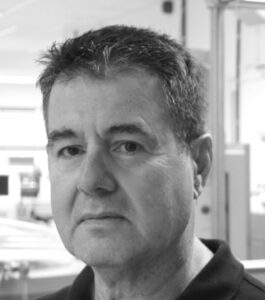
Paul Christakopoulos
Luleå University of Technology (LTU)

paul.christakopoulos@ltu.se
Project information
Participants
LTU
Swedish University of Agricultural Sciences SLU
SunPine
Bottenvikens bryggeri
Bodens utveckling AB
Hushållningssällskapet i Norrbotten-Västerbotten
Time schedule
December 2023 - December 2027
Total cost of project
7 587 731 SEK
Swedish Energy Agency project number
2023-01039
More projects
Efficient biofuel production and logistics at terminals and industry
The project’s overall objective is to produce quality-assured knowledge that can be applied directly in practice and enables increased efficiency in the…
Manager: Dan Bergström
Ongoing

Feasibility study of biofuels in efficient Humphrey cycle gas turbines
Sweden’s and Europe’s future electricity system is likely to be highly dependent on renewable but weather-dependent power sources, primarily wind and solar,…
Manager: Thommie Nilsson
Ongoing
Potential value chains for bio-based plastics
There is currently a lack of suitable bio-based raw material to cover the need and demand that exists for bio-based plastics. In…
Manager: Kerstin Jedvert
Ongoing